
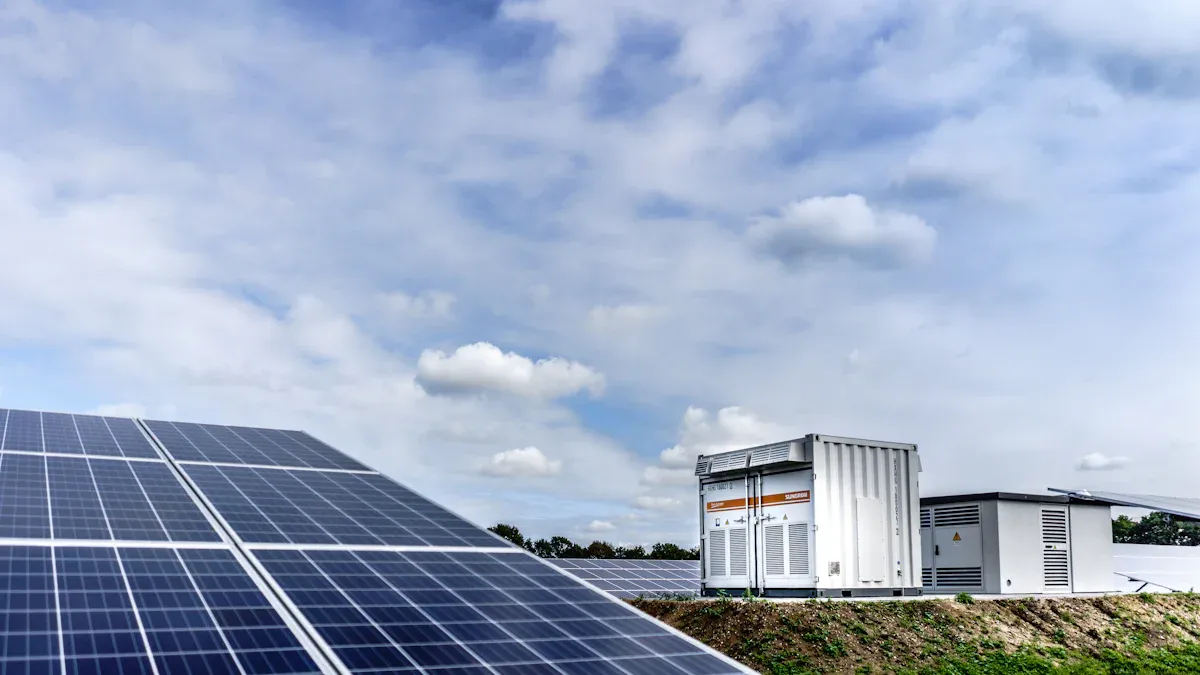
Dynamic Capacity Expansion helps you optimize your C&I energy storage system for greater flexibility, cost savings, and efficiency. You gain the ability to adjust storage capacity in real time, which lets you respond quickly to changing energy needs. Intelligent energy management systems use this approach to maximize performance and reduce waste. You can see immediate improvements in how you manage and use energy at your site.
Dynamic Capacity Expansion allows you to adjust your energy storage system's capacity in real time, providing flexibility to meet changing energy demands.
Implementing intelligent energy management systems can lower electricity costs by 10-30% while improving energy efficiency and grid support.
Modular designs enable quick scaling of energy storage systems, helping you adapt to business growth without major disruptions.
Dynamic Capacity Expansion enhances load management by allowing real-time monitoring and adjustment, preventing overloads and integrating renewable energy sources.
Investing in Dynamic Capacity Expansion can lead to significant cost savings and improved ROI, making your energy storage operations more financially viable.
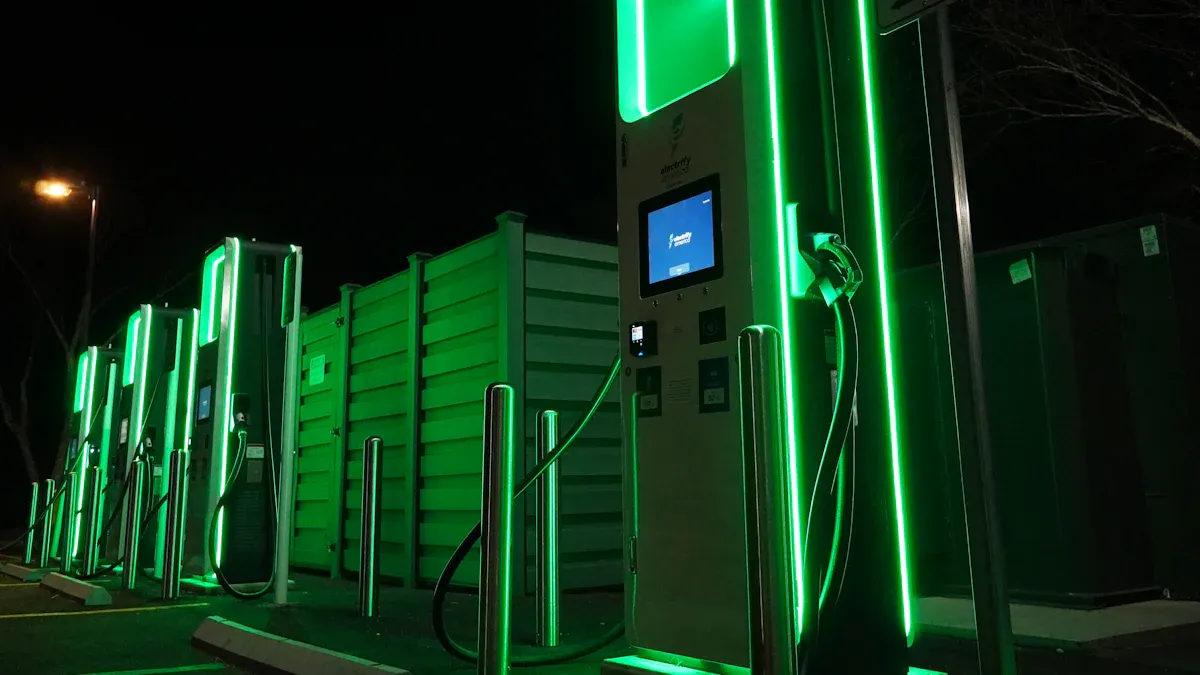
Dynamic Capacity Expansion lets you increase or decrease your energy storage system’s capacity as your needs change. You do not need to commit to a fixed system size from the start. Instead, you can add or remove battery modules, upgrade management systems, or adjust power conversion equipment as your operations grow. This approach gives you the flexibility to respond to new business demands or changes in energy usage patterns.
Here are some key components that make up a flexible energy storage system:
Component | Description |
|---|---|
Battery Cells/Modules | Store energy and can be added or removed to change capacity. |
Battery Management System (BMS) | Monitors and manages battery health and performance. |
Power Conversion System (PCS) | Converts stored energy for use or grid export. |
Protective Enclosures | Keep the system safe in industrial environments. |
Fire Safety Systems | Prevent and manage fire hazards. |
Environmental Control Systems | Maintain optimal temperature and humidity for system performance. |
You face unique challenges at commercial and industrial sites. Your energy demands are much larger and more variable than those of residential users. You may need to manage multiple energy sources, scale across several locations, and control costs from high demand charges. Dynamic Capacity Expansion helps you address these challenges by letting you scale your system as your business grows.
Factor | Commercial & Industrial Sites | Residential Applications |
|---|---|---|
Energy Demands | Large and variable | Small and steady |
Financial Motivations | High savings potential | Limited incentives |
Grid Support Services | Can participate in energy markets | Rarely involved |
System Size and Cost | Large systems, lower per-unit cost | Small systems, higher cost |
Demand Charge Impact | Major savings possible | Minimal impact |
You gain the ability to adapt quickly, manage costs, and support grid stability. Dynamic Capacity Expansion gives you a future-proof solution for your evolving energy needs.

You need your energy storage system to adapt as your business grows or as your energy needs change. Dynamic Capacity Expansion gives you this flexibility. Modular designs let you add or remove battery units quickly, so you can scale your system up or down without major disruptions. This adaptability is especially important for facilities like factories and hospitals, where energy demands can shift rapidly. Containerized solutions make it even easier to deploy or relocate storage, reducing installation time and increasing portability.
Policy changes now focus on flexibility rather than just capacity. This shift encourages you to invest in systems that can respond to new energy needs and economic conditions. When you use Dynamic Capacity Expansion, you can meet these evolving requirements with ease.
You can see the measurable outcomes of increased flexibility and scalability in the table below:
Outcome | Measurement |
|---|---|
Reduction in energy costs | 30% |
Increase in renewable energy utilization | 40% |
Reduction in carbon emissions | 25% |
Note: Flexible and scalable systems help you reduce costs, use more renewable energy, and lower your carbon footprint.
Cost efficiency remains a top priority for any commercial or industrial operation. Dynamic Capacity Expansion helps you optimize your investment by allowing you to expand storage only when needed. This approach avoids the high upfront costs of oversizing your system. You can also stack multiple applications, such as peak shaving and grid services, to maximize battery usage and tap into new revenue streams.
The table below shows the average return on investment (ROI) for C&I energy storage systems using Dynamic Capacity Expansion in different regions:
Region | ROI |
|---|---|
Middle East | |
Southern Europe | 18-25% |
China | 15-20% |
North America | 20-26% |
Southeast Asia | 12-18% |
You also benefit from techno-economic advantages. By optimizing both power and energy capacity allocation, you improve the financial viability of your energy storage operations.
Benefit | Description |
|---|---|
Optimization of Battery Utilization | Stack multiple applications for better efficiency. |
Revenue Streams | Access new sources of income through grid services and demand response. |
Techno-Economic Benefits | Improve financial outcomes by matching capacity to actual needs. |
Dynamic Capacity Expansion improves how you use energy at your site. By managing transformer loads during peak demand, you can practice peak shaving and valley filling. This means you store energy when demand is low and use it when demand is high, which reduces your reliance on expensive grid power and avoids unnecessary upgrades.
Some studies show that including societal factors in energy storage planning leads to better performance, especially in countries with high levels of decentralized renewable energy. Improved modeling and planning help you get the most out of your storage system.
The STONES model shows better results when societal factors are considered, especially in countries like Spain, Sweden, and the United Kingdom.
Most countries see improved energy utilization with dynamic planning, except for a few outliers.
Tip: Optimizing energy utilization with Dynamic Capacity Expansion helps you save money and support sustainability goals.
You face many challenges in managing loads at your facility, such as rising electricity demands and peak tariffs. Dynamic Capacity Expansion lets you address these issues by enabling real-time monitoring and adjustment of power distribution. This approach prevents overloads, supports renewable integration, and keeps your energy use within safe limits.
Dynamic capacity expansion through dynamic load management enhances load management for commercial and industrial facilities by optimizing energy usage, preventing overloads, and integrating renewable energy sources. It allows for real-time monitoring and adjustment of power distribution, ensuring that energy consumption remains within safe limits while maximizing efficiency.
Advances in IoT, cloud computing, and edge analytics now allow you to make decentralized decisions quickly. This technology improves the performance and responsiveness of your load management solutions.
You can solve common load management challenges, such as:
Rising electricity demands
Peak tariffs
Limitations of traditional grid expansion
Proactive energy management through storage
Peak shaving and off-grid resilience
Note: Dynamic Capacity Expansion supports your sustainability and carbon reduction goals by making your energy use more efficient.
Integrating solar energy into your operations can be challenging because solar generation varies with the seasons and weather. Dynamic Capacity Expansion helps you plan your storage to match these fluctuations. By coordinating storage with solar output, you can reduce overall generation costs and improve reliability.
Key Findings | Implications for Solar Integration |
|---|---|
Seasonal generation characteristics of renewable sources like solar and wind lead to mismatches with load demand. | Dynamic capacity expansion helps in planning energy storage to align with these seasonal variations. |
Coordinated planning for multi-temporal energy storage can reduce comprehensive generation costs by 1%-18%. | Improved efficiency and reliability in integrating solar energy into commercial and industrial systems. |
Increased transmission utilization hours correlate with a proportional increase in long-term energy storage capacity demand. | Supports the need for dynamic capacity expansion to meet growing energy storage requirements. |
You can use Dynamic Capacity Expansion to ensure your storage system grows alongside your solar installations. This approach helps you maximize the value of your renewable investments and maintain a stable energy supply throughout the year.
To truly unlock the potential of Dynamic Capacity Expansion, your energy storage system needs a power conversion solution that is both flexible and intelligent. Megarevo’s PMAE Modular Inverter (150–630 kW) is built precisely for that purpose.

Its modular architecture enables seamless scalability—each power module can operate independently or in parallel, allowing you to expand capacity step by step as your site’s energy needs evolve. This design not only supports gradual investment but also provides N+X redundancy, ensuring system reliability even during maintenance or partial load operation.
With an integrated 10.1" touchscreen, the PMAE combines local EMS and BMS control, giving you real-time visibility of energy flows and system status. Advanced functions like smart hibernation improve efficiency by up to 5%, while multi-string technology enhances battery performance and safety—key requirements for dynamic, high-power environments such as factories, data centers, or logistics hubs.
The PMAE achieves a maximum efficiency of 98.5%, supports fast charge/discharge switching (<20 ms), and operates reliably across a wide DC voltage range of 600–950 V. Together, these features make it an ideal match for applications like peak load shifting, demand-side management, and emergency backup, all central to dynamic capacity strategies.
By combining intelligent control with modular scalability, Megarevo’s PMAE Modular Inverter transforms dynamic capacity expansion from a concept into a practical, future-ready solution for C&I energy storage.
.png "English")
.png "中文")
.png "Arab")
.png "Spain")
.png "Portugal")


