
A power conversion system changes electricity from one form to another, making it essential for both energy storage and grid applications. These systems control how power moves between the grid and a battery energy storage system, helping manage energy use and improve grid reliability. Today, their importance keeps growing. The global market is expected to reach $17.83 billion by 2032, as shown below:
| Attribute | Value |
|---|---|
| Estimated Market Value in 2026 | $8.94 Billion |
| Forecasted Market Value by 2032 | $17.83 Billion |
| Compound Annual Growth Rate | 12.1% |
Power conversion systems are used to balance electricity flow, stabilize renewable energy, and keep battery systems safe. The MEGA Power Conversion System is a leading example, offering advanced features for modern power needs.
●A power conversion system changes electricity between AC and DC, enabling energy storage and grid management.
●The MEGA Power Conversion System offers high efficiency, reaching up to 98.7%, making it reliable for various energy applications.
●Bidirectional power conversion allows systems to charge batteries with excess grid energy and discharge stored energy when needed.
●Advanced communication protocols in modern systems enhance control, monitoring, and integration with renewable energy sources.
●Safety standards like IEC/EN 62109-1/-2 ensure that power conversion systems operate reliably and protect users.
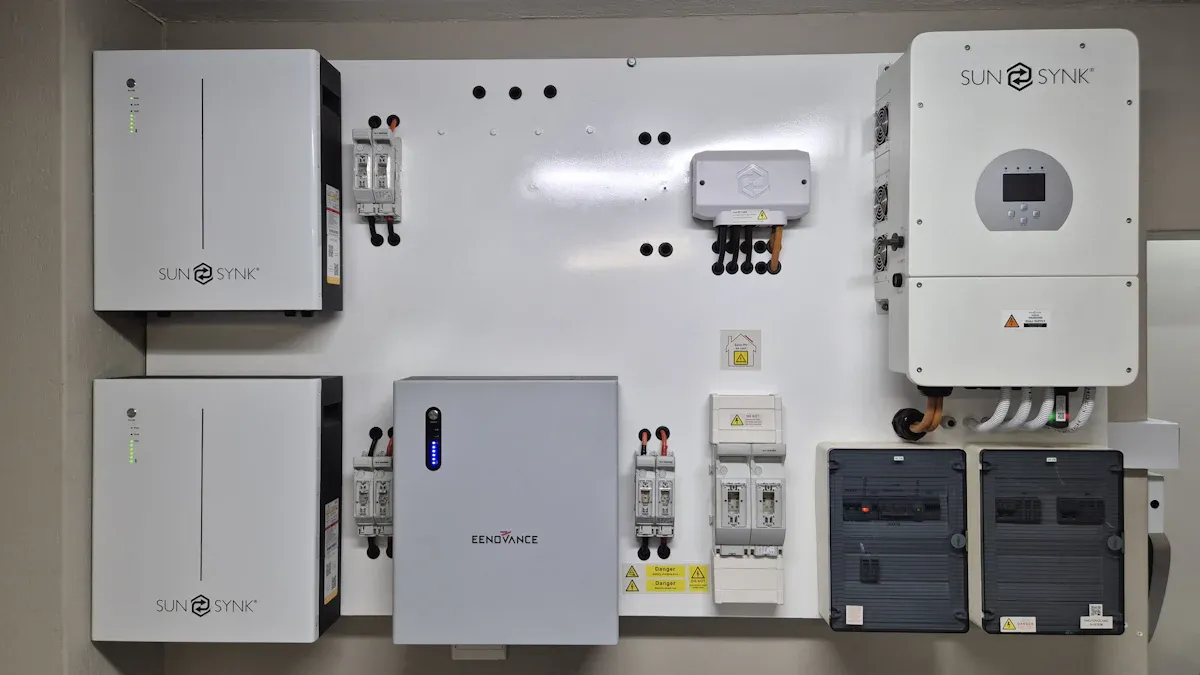
A power conversion system is a device that changes electricity from one form to another. It manages the conversion between direct current (DC) and alternating current (AC). This function is important because most batteries store energy as DC, while the grid and many devices use AC. In charging mode, the system transforms AC from the grid or renewable sources into DC for storage in batteries. In discharge mode, it converts stored DC power back into AC for use by the grid or local loads.
The MEGA Power Conversion System stands out as a leading example. It offers high efficiency, reaching up to 98.7%. It also meets strict safety standards, including IEC/EN 62109-1/-2 and EN 50549-1 certifications. These features make it reliable for many energy applications.
A battery energy storage system relies on a power conversion system to manage energy flow. The system enables bidirectional power conversion, which means it can both charge and discharge batteries. When there is extra electricity on the grid, the system charges the batteries by converting AC to DC. When the grid needs more power, it discharges the batteries by converting DC back to AC.
The power conversion system also communicates with the battery management system. This ensures safe operation and balances the flow of energy. It helps regulate the frequency of the grid by adjusting output as needed. The MEGA Power Conversion System supports these functions with advanced communication protocols like IEC61850, RS485, and TCP/IP. It also provides real-time monitoring through a user-friendly LCD touch-screen display.
Tip: A power conversion system is essential for flexible and reliable energy storage. It allows energy to move in both directions, supporting grid stability and renewable integration.
There are several types of pcs used in energy storage, each designed for different applications. The main types include:
●Low-voltage PCS: Used in small-scale or residential systems, operating below 1,000 volts.
●Medium-voltage PCS: Common in commercial and industrial settings, operating between 1,000 and 35,000 volts.
●High-voltage PCS: Ideal for utility-scale and grid-level projects, supporting large energy storage plants.
●Bi-directional PCS: Supports both charging and discharging, making it suitable for dynamic grid functions.
Other types of pcs used in energy storage include centralized, string, and modular designs. Centralized systems handle large amounts of power, while string systems assign a dedicated unit to each battery string for better fault isolation. Modular systems allow for easy expansion and maintenance.
| Type | Description |
|---|---|
| Low-Voltage PCS | Used in small-scale or residential BESS, operates below 1,000V. |
| Medium-Voltage PCS | Used in commercial and industrial systems, operates between 1,000V to 35kV. |
| High-Voltage PCS | Used in utility-scale and grid-level projects, supports large containers and centralized ESS plants. |
| Bi-directional PCS | Can both charge and discharge efficiently, supporting dynamic grid functions. |
The MEGA Power Conversion System offers models like MEGA0500 and MEGA0630, which are suitable for high-voltage and grid-level applications. These models provide robust performance, flexible configuration, and support for multiple battery types, making them adaptable to various energy storage needs.
A power conversion system operates as a bidirectional device that manages the transformation between direct current and alternating current. This process is essential for battery energy storage systems. The system works in two main modes. In charging mode, it converts AC from the grid into DC for battery storage. In discharging mode, it changes DC from the batteries back into AC for use by the grid or local loads. The ability to switch between these modes allows the system to respond quickly to changes in energy demand.
Modern systems, such as the MEGA Power Conversion System, use advanced power electronics. Devices like IGBT and SiC help achieve precise control over power flow, voltage, and frequency. The system can adjust output power within milliseconds, supporting grid synchronization and stability. This rapid response is vital for maintaining reliable energy supply and optimizing efficiency.
Note: Grid synchronization ensures that the power conversion system matches the grid’s voltage and frequency, allowing safe and efficient energy transfer.
The energy flow within a power conversion system follows a clear path. The system acts as the interface between the battery storage and the electrical grid. It manages the direction and type of power based on current needs.
●In charging mode, the system converts AC power from the grid into DC power. This DC power is stored in batteries for later use.
●In discharging mode, the system changes DC power from the batteries into AC power. This AC power is supplied to the grid or local loads.
●The system integrates rectification and inversion functions, allowing it to operate in both directions.
●During periods of surplus electricity or low prices, the system charges batteries by converting AC to DC.
●When demand increases, it discharges energy back to the grid, converting DC to AC.
This bidirectional operation is crucial for maintaining system stability and supporting grid synchronization. The MEGA Power Conversion System optimizes this process, ensuring efficient energy management and reliable performance.
Control and communication are central to how a power conversion system works. The system uses advanced protocols to interact with other components and the grid. MEGA’s system supports IEC61850, RS485, and TCP/IP, enabling seamless integration with energy management platforms.
Real-time monitoring features provide continuous oversight of critical components. These features help detect irregularities early, preventing outages and minimizing hazards. Condition-based maintenance, enabled by monitoring, ensures that the system receives service when needed, enhancing reliability and safety.
●The system uses a user-friendly LCD touch-screen display for real-time adjustments.
●Communication protocols allow for precise control of power flow and grid synchronization.
●Remote service support ensures that operators can manage the system from anywhere, improving operational flexibility.
Safety and reliability are further supported by MEGA’s certifications, such as IEC/EN 62109-1/-2 and EN 50549-1. The system operates across a wide temperature range and at high altitudes, making it suitable for diverse environments.
Tip: Advanced control and communication mechanisms help maintain efficiency and grid synchronization, making the power conversion system a dependable solution for modern energy needs.
A power conversion system plays a key role in large-scale grid projects. It helps manage the flow of energy between the grid and battery energy storage system. These systems support grid stabilization, frequency regulation, and peak shaving. They also provide backup power and black-start capability, which means they can restart the grid after a blackout. The MEGA Power Conversion System is well-suited for these tasks because of its flexible configuration and dual power backup. It can operate in a wide range of environments and handle high power ratings. Real-world examples include microgrids, off-grid systems, and solar plus storage solutions. These projects rely on precise control to balance supply and demand.
Note: Grid-level projects often use high-voltage batteries and need advanced control for safety and reliability.
Renewable energy sources like solar and wind are variable. A power conversion system helps capture excess energy when production is high and stores it in batteries. Later, the system releases this energy when demand increases or when renewable output drops. This process smooths out fluctuations and keeps the grid stable. The MEGA Power Conversion System supports renewable integration by offering efficient power conversion and advanced control features. It communicates with other devices to ensure energy flows at the right time. This makes renewable energy more reliable and easier to use.
●Balances supply and demand for grid stability
●Enables energy storage for later use
●Supports microgrid and off-grid operation
Industrial and commercial sites use power conversion systems to improve energy efficiency and reduce costs. These systems optimize energy conversion and facilitate grid integration. They also provide backup power during outages, which is important for businesses that need continuous operation. The MEGA Power Conversion System offers real-time control and monitoring, making it easy to manage energy use. It supports a wide range of battery types and power ratings, so it fits many applications. Companies benefit from lower electricity bills, greater self-sufficiency, and increased reliability.
Tip: Industrial and commercial users can reduce dependence on the grid and gain more control over their energy supply.
Recent years have seen major progress in the efficiency and reliability of power conversion systems. Digitalization in power electronics now allows for better connectivity and data handling. This means operators can monitor system conditions and perform preventive maintenance, which reduces downtime and increases service life. The MEGA Power Conversion System uses wide-bandgap semiconductors such as GaN and SiC. These materials help achieve high efficiency, reaching up to 98.7%. They also improve thermal performance and reduce energy losses. New converter topologies and advanced control techniques, like model predictive control, further boost system reliability. These advancements support stable operation even as voltage and current demands rise. The table below summarizes key developments:
| Advancements in Power Conversion Systems | Description |
|---|---|
| Converter Topologies | Multilevel and bidirectional designs for flexible operation |
| Semiconductor Technology | GaN and SiC for higher efficiency and better thermal management |
| Control Techniques | Advanced algorithms for precise power flow and grid support |
Modern power conversion systems are becoming smarter and more integrated. Optimized PCB design reduces resistive losses and improves energy flow. Effective thermal management prevents overheating, which keeps the system running smoothly in all conditions. The MEGA Power Conversion System features advanced communication protocols, allowing seamless integration with battery management and grid systems. Remote diagnostics and real-time monitoring enable predictive maintenance, which helps detect issues before they cause failures. Modular designs allow for easy expansion and hot-swappable components, so maintenance can happen without shutting down the entire system. These features make power conversion systems more adaptable and user-friendly.
●Optimized PCB design for higher efficiency
●Remote diagnostics for predictive maintenance
●Modular systems for flexible upgrades
Safety and standardization are critical for any power conversion system. International standards ensure that systems operate safely and reliably. The MEGA Power Conversion System meets certifications such as IEC 62109-1/-2 and EN 50549-1. These standards cover operator safety, electromagnetic compatibility, and quality management. Additional certifications like UL 9540 and UL 9540A validate the safety of integrated energy storage systems and test for battery thermal runaway. The table below lists important standards:
| Standard | Scope | Why It Matters |
|---|---|---|
| IEC 62109-1/-2 | Power converter safety | Protects operators and installers |
| IEC 61000 Series | EMC compliance | Prevents harmful interference |
| UL 9540 | Energy storage system integration | Ensures safe system operation |
Note: Adhering to these standards helps ensure that power conversion systems deliver reliable performance in all energy applications.
Power conversion systems play a vital role in energy storage and grid management. They enhance efficiency, enable bidirectional energy flow, and support renewable energy use. Advanced solutions like MEGA improve reliability and adaptability for diverse projects. Key benefits include:
●Optimized energy conversion and storage
●Reduced downtime and increased system flexibility
●Stable operation in challenging grid conditions
| Year | Market Value (USD Billion) |
|---|---|
| 2025 | 7.99 |
| 2026 | 8.94 |
| 2032 | 17.83 |
Growing demand for renewable energy and grid stability will drive further innovation. Exploring PCS technology can help meet modern energy needs.
A power conversion system changes electricity between AC and DC. It helps store energy in batteries and supplies power to the grid or devices.
MEGA achieves up to 98.7% efficiency. It uses advanced electronics and smart controls to minimize energy loss during conversion.
Yes. Power conversion systems connect solar panels or wind turbines to batteries and the grid. They manage energy flow and support stable operation.
MEGA meets strict safety standards like IEC/EN 62109-1/-2 and EN 50549-1. It includes real-time monitoring and flexible configuration for safe operation.
Modern systems, including MEGA, support remote monitoring. Operators can check performance and make adjustments using advanced communication protocols.
.png "English")
.png "中文")
.png "Arab")
.png "Spain")
.png "Portugal")


